Analysis of the differences between varistors and negative temperature coefficient thermistors.
Categories: Industry News
2025-01-02
Power circuits often use varistors and negative temperature coefficient thermistors. Their role is to protect the safety of other electronic components in the circuit, but there are significant differences between the two. So what are their differences? Today, I will provide a detailed explanation of the relevant knowledge.
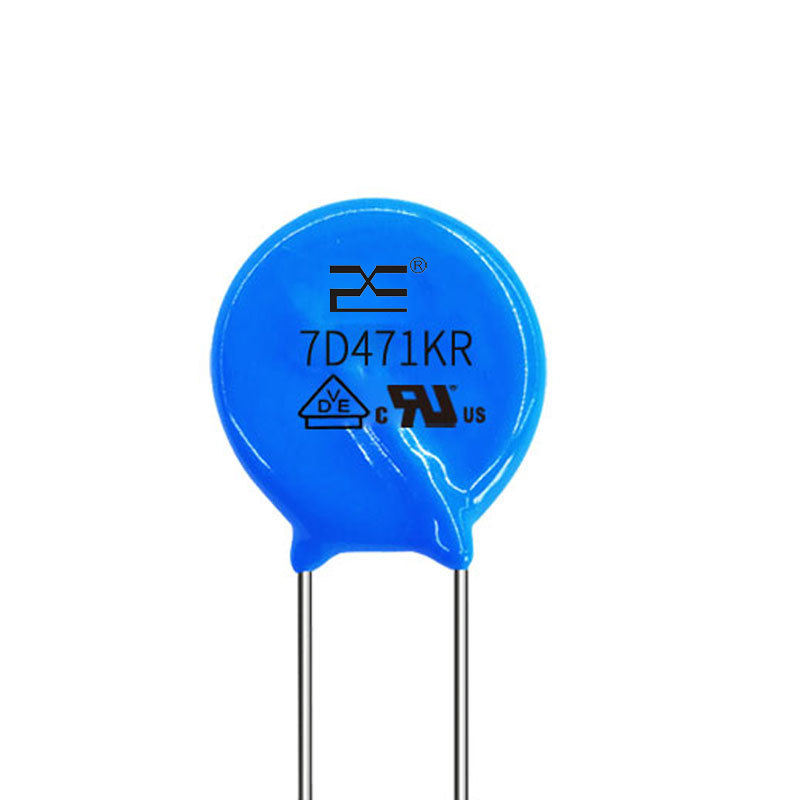
First, varistors are mainly used for overvoltage protection.
Overvoltage protection, also known as overvoltage protection, is a method of cutting off the power supply or reducing the voltage of managed equipment when the voltage exceeds a predetermined maximum value.
Varistors are metal oxide varistors (MOV). Due to these characteristics, they play a significant role in absorbing abnormal voltages and lightning surges as protectors for electronic and electrical equipment, with advantages such as high current density, low clamping voltage, and AC resistance.
Secondly, negative temperature coefficient thermistors are mainly used to suppress surge currents.
Negative temperature coefficient thermistors are temperature-sensitive resistors made from negative temperature coefficient (NTC) and special semiconductor ceramic materials. They have high resistance at room temperature, and when powered, the temperature of the resistor body increases due to self-heating, causing the resistance value to decrease. This function can be used as a current protection device for electrical and electronic equipment, effectively limiting abnormal currents, including surge currents at startup.
NTC thermistors have very low resistance in working conditions, thus consuming very low power in AC and DC circuits, making them particularly suitable for applications in motors, drivers, various power supplies, and industries such as welding and plasma cutting.
NTC is the abbreviation for Negative Temperature Coefficient, referring to semiconductor materials or components with a large negative temperature coefficient. They are primarily made from metal oxides such as manganese, cobalt, nickel, and copper, using ceramic processes. These metal oxide materials have semiconductor properties, as they are similar to semiconductor materials like germanium and silicon in terms of conductivity. At lower temperatures, these oxide materials have fewer charge carriers (electrons and holes), resulting in higher resistance. As the temperature increases, the number of charge carriers increases, and the resistance value decreases. At room temperature, the resistance range of NTC thermistors is 10Ω to 100,000Ω, with a temperature coefficient of -2% to -6.5%. Therefore, NTC thermistors can also be widely used for temperature measurement, temperature control, and temperature compensation.
In summary, the difference between varistors and negative temperature coefficient thermistors is that, simply put, varistors are used for overvoltage protection, while thermistors are used for overcurrent protection and suppressing surge currents.
RELATED INFORMATION
2025/01/02

WeChat
QR Code
Website
QR Code